



Aphrodite: Goddess of Aphrodisiacs (Part I)

Updated: Apr 16
"“Aphrodite is the Goddess of every aspect of love between humans, from the most carnal to the most tender.”." -Francis Melville, author of, "Love Potions and Charms".

Pearls of Aphrodite, Painting By Herbert James Draper, Public Domain
The word aphrodisiac comes from aphrodisiakos, which has its roots in aphrodisia, referring to pleasures associated with love and attraction. The term itself is derived from Aphrodite, the Greek goddess of love and beauty.
Aphrodite is traditionally associated with the union of complementary forces often described as masculine and feminine energies. She is widely regarded as a goddess of love, attraction, and relational harmony.
Aphrodite’s Origins:
Aphrodite’s origins are ancient. Prior to her well-known mythological emergence in Paphos on the southwest coast of Cyprus, she is often compared with earlier Near Eastern goddesses such as Ishtar, who was worshipped in Babylonia as early as 539 BCE.
The archetype associated with divine love and beauty appears across many cultures and historical periods. In Roman tradition, she is known as Venus, a counterpart who reflects similar qualities, though often expressed in a more restrained artistic style. Aphrodite is frequently depicted in classical art in the nude, symbolizing ideals of beauty, nature, and the human form. Venus, by contrast, is sometimes shown in more modest poses, reflecting changing cultural values around art and the body.
During periods of the Roman Empire, artistic representations of the goddess increasingly reflected the social norms of the time, including more modest depictions of the feminine form.
Across cultures, related goddesses include Lakshmi in Hindu traditions, Oshun in Yoruba traditions, Inanna in Sumerian traditions, and Guanyin in East Asian traditions, all of whom are associated in various ways with love, compassion, beauty, or fertility. In ancient Phoenician and early Semitic contexts, related figures such as Astarte also reflect aspects of love and devotion within religious practice.
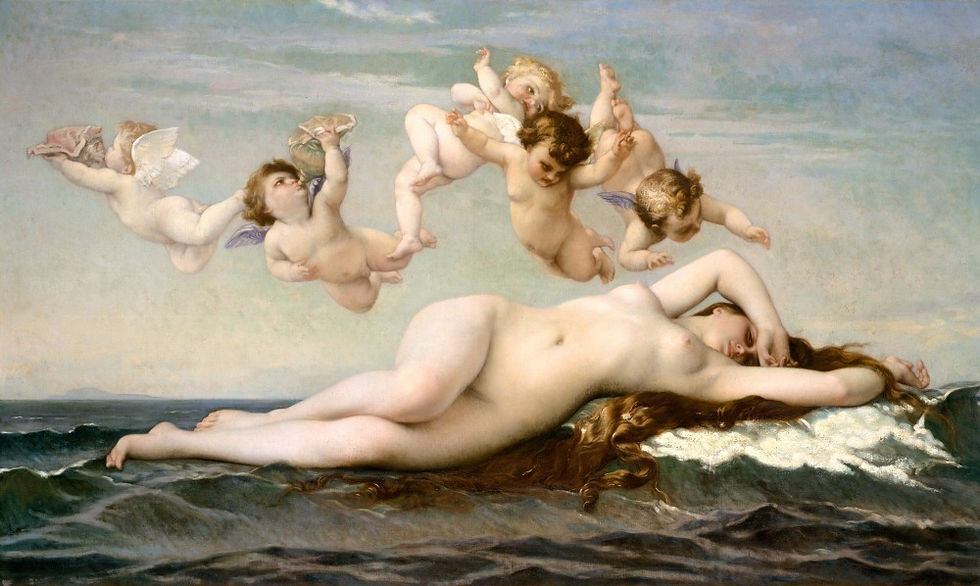
Above painting by By Alexandre Cabanel - anagoria, Public Domain
“Here the most magnificent, most charming Goddess escaped from the foam. Fragrant herbs shot forth from under her flying feet. This garlanded one who slipped from the foam. Gods and humans, they named her Aphrodite, ‘she who was nourished by the foam.’”— Homer, The Iliad
One of the Greek myths about Aphrodite describes her emergence from the sea in a powerful image of birth and transformation. In this tradition, Aphrodite arises from ocean foam upon a scallop shell, fully formed, symbolizing the sudden appearance of beauty, life, and divine presence within the natural world.
She is often portrayed as a goddess associated with love, attraction, and the harmonizing of relational forces in human experience. In this symbolic framework, her mythology reflects themes of unity, balance, and the reconciliation of opposites.
In some variations of Greek myth, her origin is linked to cosmic struggle and creation stories involving primordial deities such as Kronos and Gaia. These narratives describe transformations within the earliest ordering of the cosmos, from which new forms of life and divinity emerge.
Aphrodite as “the Virgin”
The term “virgin” in ancient contexts carried meanings that differ significantly from modern usage. In earlier traditions, it often referred to autonomy, self-containment, or independence rather than a literal statement about sexual experience.
Over time, however, the word came to be associated with social expectations and moral judgment, particularly in relation to women’s bodies and sexuality. In this mythological framing, Aphrodite’s association with the term can be understood as reflecting wholeness and self-sovereignty rather than restriction or lack.
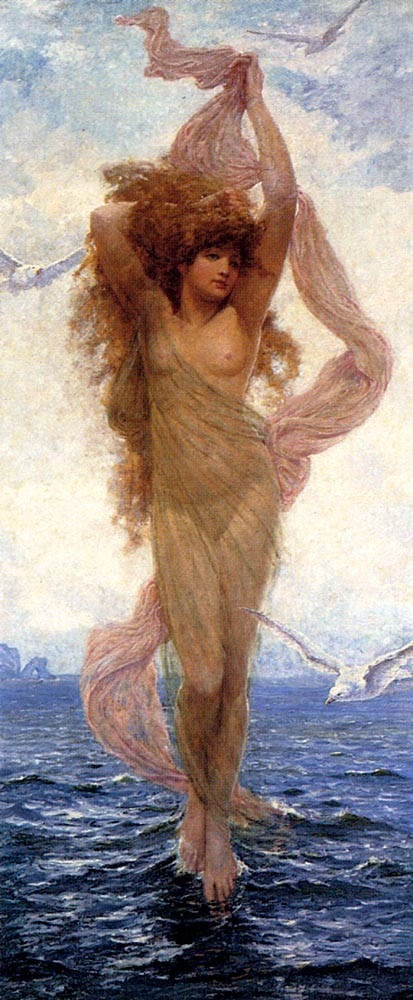
Above painting by Robert Fowler, Public Domain
Aphrodite was at times associated in ancient tradition with the concept of the “virgin goddess,” though this term does not align neatly with modern definitions of virginity. In contemporary usage, dictionaries such as Merriam-Webster define “virgin” as someone who has not engaged in sexual intercourse. However, mythological interpretations of Aphrodite often emphasize her relationships and interactions with multiple figures within Greek mythology.
In earlier cultural contexts, the term “virgin” is understood by some scholars to have carried a broader meaning, often referring to independence, self-containment, or autonomy rather than a literal description of sexual experience. Within this interpretive framework, the virgin goddess represents a figure of wholeness, self-possession, and symbolic independence, rather than ownership or relational status.
From this perspective, Aphrodite can be understood as embodying the idea of self-contained sovereignty—existing in relationship to others while remaining complete in herself. This interpretation has been used in modern discussions of mythology and symbolism to explore themes of personal integrity and inner wholeness.
These ideas are sometimes applied more broadly in contemporary spiritual and philosophical discussions to reflect on how individuals understand identity, self-worth, and personal autonomy beyond social definitions or expectations. Different people may relate to these interpretations in ways that are meaningful within their own cultural or personal frameworks.
Aphrodite is also referenced in relation to ancient ritual traditions associated with love and devotion in temple settings. Some historical sources and later interpretations describe priestess figures who participated in symbolic or ceremonial roles within these religious contexts. Modern scholarship continues to debate the nature and meaning of these practices within their historical settings.
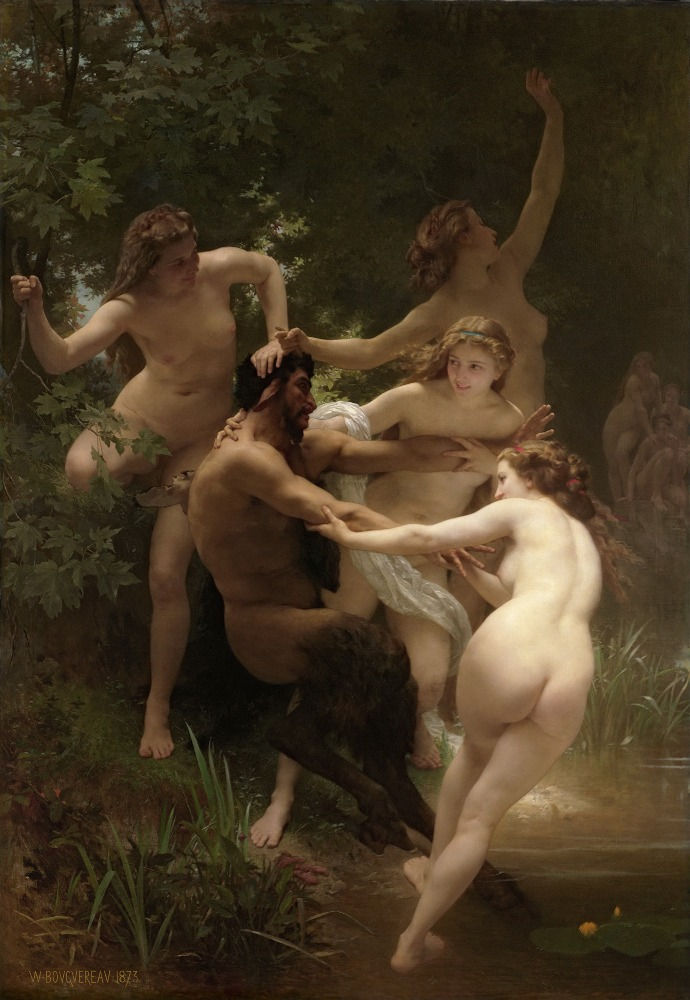
"The Nymphs" Painting by William Adolphe Bougeureau
Historical discussions of sexuality in antiquity often reflect a wide range of interpretations, and many modern scholars emphasize that these subjects are complex and not always well documented. Ideas about the relationship between sacred ritual and sexuality in ancient cultures have been the subject of ongoing academic debate.
Aphrodite is sometimes associated in later traditions with aspects of love, fertility, and aspects of social life related to hospitality and relational bonds. In comparative mythology, similar associations can be found in figures such as Inanna in Sumerian tradition, Ishtar in Akkadian tradition, and Artemis in certain regional cult practices in Ephesus, each of whom reflects distinct cultural understandings of divinity and human experience.
In some historical interpretations, priestesses connected to the cult of Aphrodite in regions such as Corinth and Cyprus are described as participating in rituals honoring the goddess. However, the exact nature of these practices is debated among historians, and surviving evidence is open to multiple readings.
Within symbolic interpretations, these traditions are sometimes understood as reflecting the integration of devotion, hospitality, and ritual expression within ancient temple culture. From this perspective, such narratives are viewed as part of broader mythological frameworks exploring love, connection, and reverence for the divine.
“O young damsels who receive strangers and give them hospitality… in inviting the Mother of Love…” - B.F. Goldberg, The Sacred Fire: The Story of Sex and Religion
Aphrodite’s Symbolic Attributes
Aphrodite is also associated in mythological literature with symbolic objects such as her magical girdle or belt, which appears in various poetic and literary traditions. These objects are often interpreted as representations of attraction, persuasion, and the power of relational connection within mythic storytelling.

"Cupid unfastening the belt of Venus", Painting by Joshua Reynolds, Public Domain
In mythological storytelling, Aphrodite is sometimes associated with symbolic objects that represent attraction, beauty, and the transformative power of love. One such symbol is her “girdle” or belt, which appears in classical literature as an object of enchantment and influence. In interpretive traditions, this has occasionally been compared to a “medicine bag” or symbolic container of qualities associated with love, persuasion, and relational connection.
From this symbolic perspective, the term “aphrodisiac” is derived from Aphrodite and has historically been used to describe substances or foods associated in various cultures with enhancing feelings of attraction, vitality, or romantic experience.
Across antiquity, a wide range of cultural traditions incorporated plants and foods into rituals connected with fertility, celebration, and devotion to deities associated with love and nature. In many cases, these practices reflected broader symbolic relationships between human emotion, seasonal cycles, and agricultural life.
Some modern interpretations suggest that certain traditional preparations may have been understood as influencing mood or perception, though the historical record is diverse and often open to multiple readings. Within these cultural frameworks, such substances were sometimes linked metaphorically to states of heightened emotional awareness or relational openness.
These themes appear in a variety of mythological and literary sources that explore the relationship between nature, emotion, and human experience.
"Birds do it, bees do it, even educated fleas do it, let's do it, let's fall in love." -Cole Porter

Aphrodisiacs are often described in cultural traditions as natural substances associated with love, vitality, and the enhancement of emotional or relational experience. Across many societies, both love and attraction have been understood as part of the wider rhythms of life and nature.
From a symbolic perspective, human experience is frequently interpreted through metaphors drawn from the natural world, including cycles of growth, fertility, and seasonal change. In this way, mythological language has often been used to describe the perceived interconnectedness between human emotion and the environment.
Within Greek mythology, Gaia represents the personification of the Earth and is often associated with fertility, nourishment, and the generative processes of nature. In artistic and poetic traditions, natural cycles such as blooming, growth, and seasonal renewal are sometimes described using imagery of union between earth and sun, reflecting ancient symbolic attempts to explain the balance of ecological forces.
Aphrodisiacs as Symbolic and Cultural Tools
In certain spiritual and philosophical traditions, particularly within Tantric literature, food, breath, and embodied experience are sometimes described as part of a broader system of energy and awareness. For example, some texts use metaphorical language to describe the relationship between bodily experience and states of perception.
“In Tantrism, many aphrodisiacs are viewed as foods for the kundalini serpent and are thought to affect both the serpent, which reposes in the body, and the chakras.” - Christian Rätsch, Plants of Love
These interpretations are typically understood within their cultural and philosophical contexts as symbolic frameworks rather than empirical descriptions.

Tantric image from Cave, Dunhuang Yuan Dynasty, (Public Domain)
Tantric traditions, with historical roots in both Hindu and Buddhist cultural contexts, describe a symbolic model of the human body that includes seven energy centers, commonly referred to as chakras. In these systems, the chakras are imagined as extending along the spine, from the base of the body to the crown of the head.
Within some Tantric and yogic traditions, the concept of kundalini is used to describe a symbolic life force represented as a serpent-like energy moving through these centers. This framework is generally understood as a spiritual or philosophical model for exploring states of awareness, embodiment, and personal development.
Practices associated with these traditions may include meditation, breathwork, movement, ritual, and other embodied disciplines. In some interpretive lineages, food and sensory experience are also incorporated symbolically into broader contemplative practices.
Aphrodisiacs and Cultural Symbolism
Aphrodisiacs have been described in various historical and cultural contexts as plants, foods, or substances associated with themes of vitality, attraction, and emotional or relational experience. Their interpretation varies widely across time and culture.
In contemporary discussion, some writers explore aphrodisiacs as part of broader symbolic systems relating to human experience, creativity, and relational awareness. These interpretations are generally understood as cultural or philosophical frameworks rather than scientific descriptions.
From this perspective, such traditions reflect attempts to articulate balance, connection, and integration within human experience using the language of nature, symbolism, and embodiment.

"Springtime" By Pierre Auguste Cot, Art Renewal Center, Public Domain
In this article, the terms “masculine” and “feminine” are used primarily as symbolic or archetypal concepts rather than as references to biological sex or gender identity. Within this interpretive framework, these terms can be understood as representing complementary qualities that appear in various ways across human behavior, relationships, and cultural symbolism.
Some psychological and philosophical systems use similar language to explore the idea that individuals may express a range of traits traditionally associated with different archetypes. From this perspective, attraction and relationship dynamics can be understood in diverse and non-deterministic ways, including within relationships between people of the same gender or across a broad spectrum of gender identities.
This article also acknowledges that not all individuals interpret these concepts through the same framework, and that understandings of identity and relationship vary widely across cultures and personal experiences.
Within certain spiritual traditions, symbolic language of polarity is sometimes used to describe experiences of balance, integration, or personal wholeness. In those contexts, practices such as meditation, movement, ritual, or engagement with symbolic plant traditions are sometimes discussed as part of broader contemplative or reflective systems. These interpretations are generally understood as philosophical or spiritual frameworks rather than literal mechanisms.
From a cultural perspective, many thinkers have observed that modern societies often emphasize productivity, structure, and hierarchy, while other values such as relational awareness, ecological sensitivity, or emotional integration receive less attention. Some writers use metaphorical language to describe this perceived imbalance in cultural priorities, though interpretations of these dynamics vary widely.
This article engages with these ideas as part of a broader exploration of myth, symbolism, and cultural interpretation.

Floor mosaic in Umbria, Italy, ca. 200 – 250 AD. depicting Uranus, Gaia and their 4 children representing the 4 seasons Public domain.
“The domination of women and the domination of nature are fundamentally connected. In other words, violence against Mother Earth came to be intertwined with an emerging urge to subdue and control women.” - Cathleen McGuire and Colleen McGuire, Ecofeminist Visions
In ecofeminist scholarship, some thinkers explore the historical and symbolic connections between how societies relate to the natural world and how they construct gendered power dynamics. These interpretations vary widely, but they often highlight the ways cultural values shape attitudes toward both human communities and the environment.
From a mythological and symbolic perspective, the figure of the “divine feminine” is sometimes used to represent qualities associated with nurturing, interconnection, and ecological relationship. Within this interpretive framework, the Earth is often personified in poetic traditions as a maternal figure, reflecting humanity’s longstanding tendency to use familial imagery to describe ecological interdependence.
Many contemporary environmental thinkers emphasize the importance of restoring balanced relationships with the natural world, including greater awareness of ecological limits and interdependence. These perspectives are often expressed through diverse cultural, scientific, and philosophical languages rather than a single unified worldview.
In recent years, there has also been renewed interest in plant knowledge, ecological traditions, and cultural practices involving medicinal or symbolic uses of plants. This resurgence is often discussed within broader conversations about sustainability, cultural heritage, and environmental awareness.
This article engages with these ideas through the lens of myth, symbolism, and cultural interpretation, reflecting on how different traditions understand humanity’s relationship with the natural world.
Aphrodisiacs; An Offering of Love:
Above Image: Shakti Botanicals Logo
“When love is aroused through pharmacological means, it can unfold its healing powers much more precisely and successfully. When the heart chakra has been opened with pharmacological or meditative techniques, a never-ending fountain of unconditional love issues forth that enables a person to experience unity with the universe and with this, enjoy profound sensations of harmony and happiness.” - Christian Rätsch, Plants of Love
Within certain ethnobotanical and spiritual traditions, aphrodisiacs are described as plants associated with love, vitality, and emotional or relational openness. In some systems of thought, such experiences are interpreted through symbolic frameworks that connect bodily awareness, emotional states, and broader philosophical ideas about unity and interconnection.
From a mythological perspective, Aphrodite and Gaia are sometimes used as archetypal figures representing love, nature, and the generative forces of life. In this symbolic reading, plants associated with attraction or ritual use in different cultures are sometimes understood as part of broader human attempts to engage with nature through meaning, ceremony, and storytelling.
Across history, societies have varied widely in how they regulate or interpret substances associated with emotion, ritual, or altered states of perception. Some historical narratives suggest that rulers or institutions have at times restricted certain practices to maintain social order or discipline, though motivations and evidence differ across contexts and remain subjects of scholarly interpretation.
Within contemporary cultural and philosophical discussions, some authors explore the idea that love, connection, and ecological awareness are deeply intertwined themes in human experience. These interpretations are often expressed metaphorically, using the language of unity, nature, and relational harmony.
The concept of a “Gaian renaissance” or renewed interest in plant knowledge and ecological traditions appears in some modern environmental and cultural writing, often in reference to broader movements toward sustainability, biodiversity awareness, and cultural reconnection with the natural world.
This article engages with these ideas as part of an exploration of myth, symbolism, and cultural narratives surrounding love, nature, and human experience.
-Lovingly Written by: Renee Boje, owner of Freja's Magic Potions
Sources:
-Donald Harden, The Phoenicians,
-Christian Ratsch, Plants of Love,
-Christian Ratsch, Witchcraft Medicine,
-Helena Blavatsky, Isis Unveiled,
-David Deida, Intimate Communion,
-B.F. Goldberg, The Sacred Fire: The Story of Sex and Religion,
-Homer, The Iliad,
-Orphic Ode,
-Nancy Quals-Corbett, The Sacred Prostitute,
-Cathleen McGuire and Colleen McGuire, Ecofeminist Visions,
-Francis Melville, Love Potions and Charms
-D'Andrea, Jeanne. Ancient Herbs in the Paul J. Getty Museum Gardens. 2nd ed. Malibu, California, 1982 Print,
-Marc A. Shampo, Ph.D., Robert A. Kyle, M.D., Medical Mythology: Aphrodite (Venus), May 1992 Volume 67, Issue 5,
Author: Renee Boje


Comments